Ambiguity Rewards the Curious
Santiago kept walking not because he knew where he was going, but because stopping would have meant never knowing. That's the only strategy that works.
One of my favorite books that I return to about once a year for a quick re-read is, as I've come to learn, a little controversial: *The Alchemist* by Paulo Coelho.
To be fair, the critics I've come across seem to nail it. It's simple to the point of obvious. It seems to reinforce the idea of "magical thinking." It can read like a multi-chapter motivational poster.
But what I think they miss is that the simplicity is the point.
Santiago, the main character of the story, has a vision in a dream that he decides he has to pursue. As he works toward realizing that dream, he comes across multiple opportunities to stop, stay, and enjoy the life he's built. Or to turn around and go back to his old life after each setback.
Instead, he keeps walking.
Not because he knows that the vision in his dream is true, but because he's curious and he needs to satisfy that curiosity, knowing that no matter how comfortable a life he's built, he'll never be settled not knowing what might have happened.
Santiago wasn't foolish. He was curious.
The world, in my experience, rewards the curious.
Had I decided not to be curious, I might still be running summer camps. Which, to be fair, doesn't sound so bad! But it would've been like Santiago deciding to stay in Tangiers selling crystal tea cups. A nice life, but not the one meant for him.
In a world increasingly leaning into AI, I believe that curiosity is not just valuable—it might well be the most important disposition you can bring to it.
But of course, Santiago wasn't just curious. He was driven to satisfy that curiosity. Similarly, it's one thing to say, "Hmm, I'm curious about this new AI stuff at work," but if that's not followed by, "Let's see what it can do," and then continuing down that road, it leads nowhere.
Idle curiosity is feckless.The magic comes when you let your curiosity push you a little further than you're comfortable.
Most individuals and organizations who are curious about AI—or really any kind of possible transformation—stop at the curiosity. They log every risk in the register. They spend hours discussing and debating. They theorize about what it might be like to take that next step. They stay in the fields with their flock of sheep, far away from what their imagination can conjure, and never find out if there was ever any truth to it.
Or maybe they take a few steps. They get an Enterprise License for Claude or ChatGPT, but they don't really attach it to any real direction. They just hand their employees a couple of rocks and tell them to look for the omens to lead them.
Okay, but where?
Curiosity needs a direction.
Giving an enterprise team access to AI without direction will likely turn up many ideas, a few of them probably pretty good. But without some sense of what we're looking for, those ideas tend to scatter in every direction. Curiosity without direction has a way of never being satiated. Every path looks interesting. Every possibility seems worth exploring. Eventually, progress gets lost in exploration.
Real, actionable, transformational curiosity lives and breathes in comfort with ambiguity.
Santiago didn't really know what would happen when he left Spain, or Morocco, or the Oasis, but he was comfortable enough with that ambiguity to start walking, join a caravan, and meet an Alchemist. Learning, growing, changing, and discovering more of himself at every step.
Direction + Ambiguity = Alchemy
Think:
"I don't know exactly where this is going, or how we might get there, but I believe that if we keep walking, we're going to stumble onto something great. Be open to everything that looks like it has legs."
That's the position.
For me, those moments have occurred over and over throughout my life. As I mentioned in *Grieving Your Past Selves*, I have been many different people over the years, and each of those transitions was led by curiosity and a vague sense of direction.
I didn't know what would happen when I left my hometown to move to Chicago, but I was curious to see what might happen.
Or when I moved to Detroit.
Or when I left the world of nonprofits to get into digital marketing.
Or when I moved from the customer side to the consulting side.
Or when I moved from Enterprise to Startup.
At every step, it has been a comfort with ambiguity, paired with curiosity about what might happen next.
Some people are naturally more comfortable with ambiguity than others, more willing to let curiosity take a seat at the table. But I'd bet you have similar moments in your own life. Moments where you didn't know exactly what was coming next, but stepped forward anyway.
So whether you're looking for the right city, job, company, or partner—or whether you're trying to figure out how AI might transform your business—set a direction and be curious.
Know what you're looking for, but don't assume you know where you'll find it. Don't assume the first thing you stumble upon is the destination. Stay curious, refine your direction, and keep searching.
The answers you're looking for, whatever they are, don't lie in comfort or clarity.
They lie somewhere on the other side of the sea, on the far end of the desert.
You might lose some things along the way. You might feel like you've been left for dead beneath the pyramids.
But that just might be the moment you finally see the road forward most clearly.
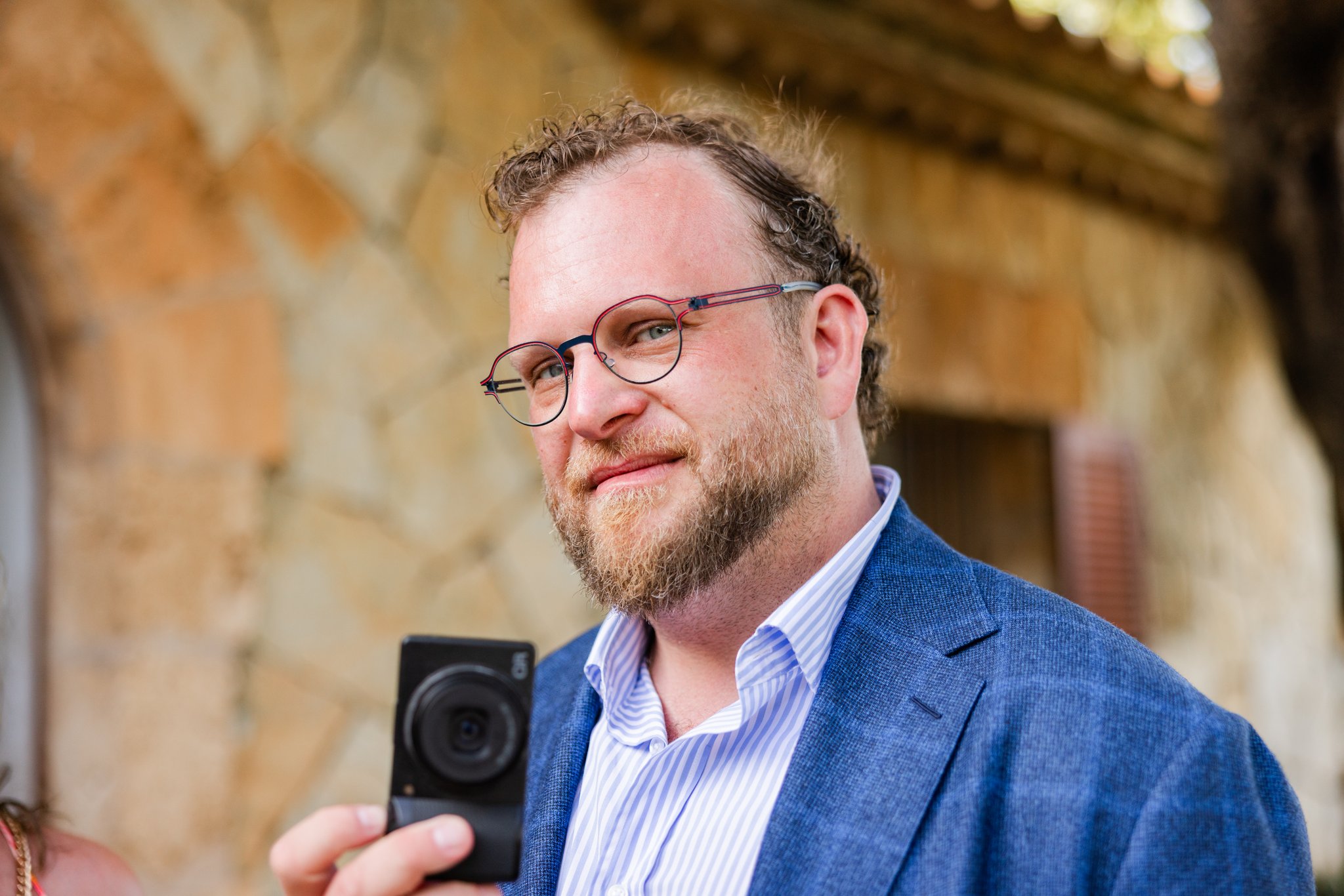
Ryan Yepsen
Ryan writes about enterprise AI, customer reality, systems thinking, and the operating conditions that make meaningful execution either possible or painful.